How to choose an intelligent crane: A complete guide to EUROHOIST factory automation solutions
- Categories:News
- Publish Time:2026-07-23 11:25:20
When factories begin to talk about intelligent manufacturing, reduced manpower, and stable cycle times, lifting equipment is often an underestimated link. Many workshops are not unable to lift, but lift slowly, sway greatly, fail to align, and cannot connect to systems—these problems directly drag down production line efficiency and safety. Focusing on the most commonly searched needs related to "intelligent crane brand recommendations," this article clearly explains real scenarios, procurement pain points, industry trends, and EUROHOIST's capabilities in factory intelligent lifting in one go.
When factories start talking about intelligent manufacturing, reduced manpower, and stable cycle times, lifting equipment is often an underestimated link. In many workshops, the problem is not that things "can't be lifted," but that lifting is slow, swinging is large, alignment is off, and systems can't be connected—these problems directly drag down production line efficiency and safety. Centering on the most commonly searched demand related to "intelligent crane brand recommendations," this article explains in one go the real scenarios, procurement pain points, industry trends, and EUROHOIST's capabilities in factory intelligent lifting.
1. What users are really looking for: not a heavier crane, but a more stable cycle time
In automotive manufacturing, electronics processing, mechanical assembly, pipe storage, waste incineration power generation, and other sites, when buyers mention "intelligent cranes," their core demands usually focus on these categories:
Anti-sway and enhanced stability: reduce load sway, shorten the time waiting for stabilization, and improve single-cycle efficiency.
Precise positioning: reliable positioning under repeated paths, reducing manual visual correction and lowering collisions and rework.
Human-machine isolation: in high-dust, high-temperature, odorous, or continuous-operation scenarios, operators are expected to stay away from hazardous areas.
System collaboration: cranes are no longer isolated equipment, but must be able to receive tasks, feed back status, and even connect to MES / WCS / production line scheduling.
Upgrade path: not only solve current pain points, but also preserve room for evolution from remote control and semi-automatic to fully automatic.
To put it plainly, what everyone wants is: Upgrade "able to lift" into "able to lift stably according to the process rhythm".
2. Changes happening in the industry: from standalone equipment to production-line-level intelligent handling
In recent years, demand related to intelligent lifting has clearly heated up, driven by three parallel trends:
1. In-factory logistics has become a bottleneck in intelligent manufacturing
Production line equipment is becoming increasingly refined, but if loading and unloading, transfer, and inbound/outbound storage still rely on experience-based operation, the cycle time will fluctuate in the "last hundred meters." Intelligent cranes have therefore changed from "auxiliary equipment" into "production line capability components."
2. Unmanned and reduced-manpower operations have moved from slogans to acceptance indicators
Companies want to know whether equipment supports remote control, automatic travel to preset positions, safe shutdown in abnormal conditions and traceable operating data. Procurement reviews increasingly focus on integration and commissioning plans and acceptance criteria, rather than parameter tables alone.
3. Demand for customization under special working conditions is rising
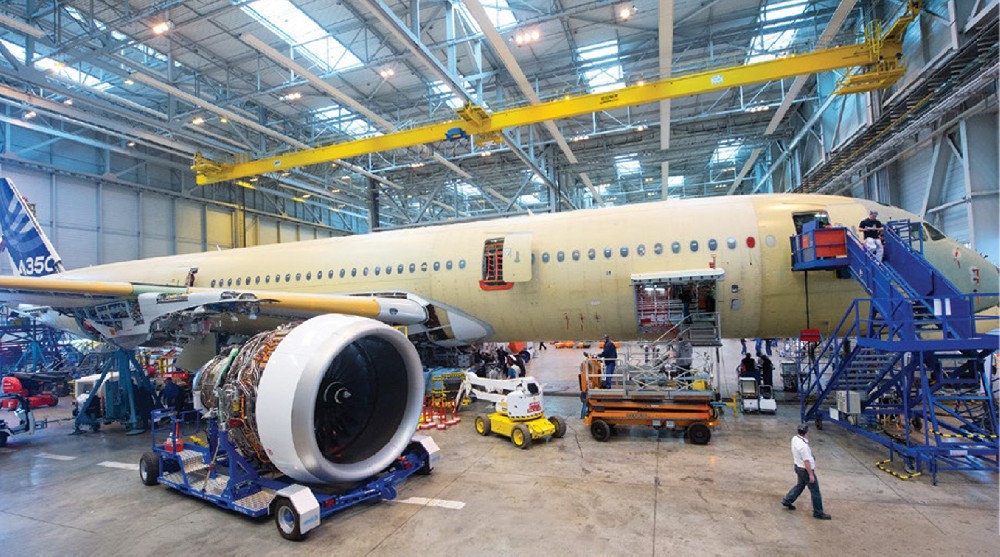
Waste-to-energy grab operations, automatic steel pipe handling, electromagnetic lifting, handling of forgings and underslung cranes for aviation applications cannot all be served by one standard product. Suppliers that translate their understanding of the process into control logic are better placed to deliver these projects.
Against this background, behind searches such as "intelligent crane brand recommendations," the truly high-value question is:
Which company better understands factory working conditions and can turn anti-sway, positioning, unmanned operation, and system integration into a deliverable solution?
3. Typical application scenarios: problems EUROHOIST intelligent lifting more often solves
Scenario A: Automotive / electronics / precision machining workshops
Pain points: tight cycle times and high positioning requirements; sway and inaccurate stopping directly affect cycle time and finished product protection.
Solution direction: anti-sway + precise positioning + semi-automatic/fully automatic operation, making repeated handling paths stable and predictable.
Scenario B: Pipe, profile, and electromagnetic material storage areas
Pain points:The material is long, heavy, and prone to swinging, making manual alignment costly.
Solution direction:Fully automatic steel pipe cranes, fully automatic electromagnetic cranes, etc., supporting manual / semi-automatic / fully automatic mode switching to suit automation goals at different stages.
Scenario C: Waste incineration and continuous grab operation
Pain points:The environment is harsh, continuous operation intensity is high, and on-site attendance pressure is great.
Solution direction:Intelligent waste grab cranes, emphasizing stable cycles, remote or unattended capability, and reduced personnel exposure.
Scenario D: Steel and aluminum forgings, heavy-duty special handling
Pain points:High temperature, heavy load, and complex posture control.
Solution direction:Special models such as intelligent steel and aluminum forging handling, with working modes and safety logic configured according to working conditions.
Scenario E: Special suspension and customized handling for aerospace, new energy, etc.
Pain points:The spatial structure is special, and safety and precision requirements are extremely high.
Solution direction:Special solutions such as multi-point support, suspension, and visual recognition, customized by project.
IV. Advantages of EUROHOIST: turning "intelligence" into deployable factory capability
EUROHOIST focuses on the new construction and fully automatic unmanned upgrade of industrial lifting equipment, providing complete solutions for real factory processes. Compared with "just selling a crane," we place more emphasis on the following perceptible and verifiable advantages:
1. Clear factory intelligent lifting DNA
Products cover standard bridge/gantry cranes, fully automatic unmanned intelligent lifting systems, waste incineration grabs, electric hoists, jib cranes, as well as aerospace manufacturing suspension and new energy-related special handling, etc. The capability radius revolves around factory and industrial site material handling rather than pasting intelligence as a slogan onto general-purpose equipment.
2. Key intelligent capabilities can be put into the proposal
Around fully automatic intelligent cranes, the proposal focuses on:
Anti-sway:reduces load sway and improves efficiency and safety
Precise positioning:serves repeated paths and takt-based operations
Automatic avoidance and path logic:supports more complex automatic operation
Multi-mode switching:manual, semi-automatic, and fully automatic can be configured according to project stages
These are not stacked promotional phrases, but technical topics to be aligned item by item in project discussions.
3. Lightweight, low-headroom design helps customers save "invisible costs"
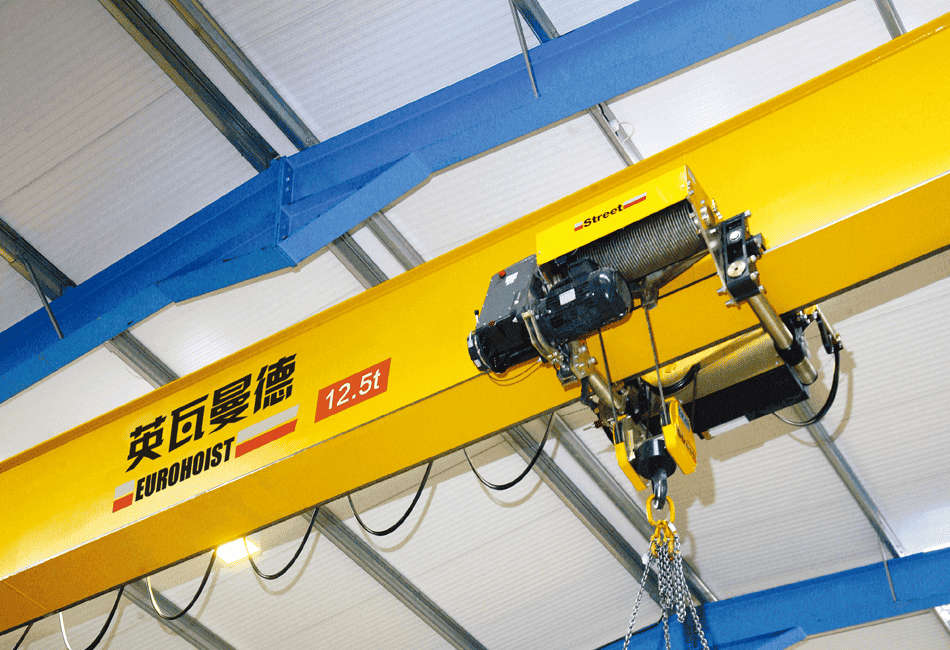
EUROHOIST has long emphasized light self-weight, low headroom, and efficient operation. For new factory buildings, this means an opportunity to reduce civil construction and rail-related investment; for retrofit projects, it is more conducive to increasing usable lifting height and layout flexibility within existing space.
4. Combination of European experience and local delivery
The brand draws on European crane design and manufacturing experience and serves industrial customers worldwide. Its production, assembly and project delivery capabilities in China support site surveys, integration and commissioning, and after-sales response for local factory projects. Management-system certification and compatibility with multiple standards also help meet stringent tender requirements and common specifications across multinational factories.
5. A complete path from standalone machines to unmanned upgrades
We not only provide one-time planning for intelligent lifting in new plants, but also support intelligent upgrades of old equipment: first solve anti-sway and safety, then move to remote/semi-automatic, and once conditions are mature, advance to fully automatic and system integration. This reduces the project risk of "achieving one-step readiness but being unable to use it."
6. Broad industry coverage, making it easy to reuse experience from similar working conditions
Automotive manufacturing, machining, power and energy, high-temperature steel and aluminum, papermaking, waste incineration power generation, aerospace, and more are all engineering fields that EUROHOIST has served for a long time. Experience with similar processes often shortens solution refinement time more than paper specifications.
V. Practical recommendations for procurement and engineering teams
If you are selecting intelligent cranes or carrying out in-plant unmanned transformation, it is recommended to proceed in the following order:
First write down the working conditions clearly: material form, cycle time, path, environment, safety red lines.
Then determine the automation level: assisted intelligence / semi-automatic / fully automatic, matched to budget and process maturity.
Write the interfaces into the requirements: whether to connect to MES/WCS, which status feedback and task commands are needed.
Require acceptance indicators: anti-sway effect, positioning accuracy, abnormal shutdown logic, joint debugging cycle, training, and after-sales response.
Choose a partner who can support integration and commissioning: half the value of intelligent lifting lies in the equipment, and half in getting the process running smoothly.
EUROHOIST can provide coordinated support in the above links, from solution design and equipment manufacturing to installation, commissioning, and long-term service. Equipment consultation hotline: 400-000-6926.
Conclusion
The rise in search popularity related to intelligent crane brands essentially reflects factories' rigid demand for stable cycle times, safety with fewer people, and system collaboration. The value of EUROHOIST lies in turning anti-sway, precise positioning, unmanned operation, and customized solutions for special working conditions into deliverable solutions for real factories—making the lifting link truly part of intelligent manufacturing, rather than the last uncertain factor on the production line.