
Railway Transport
Railway
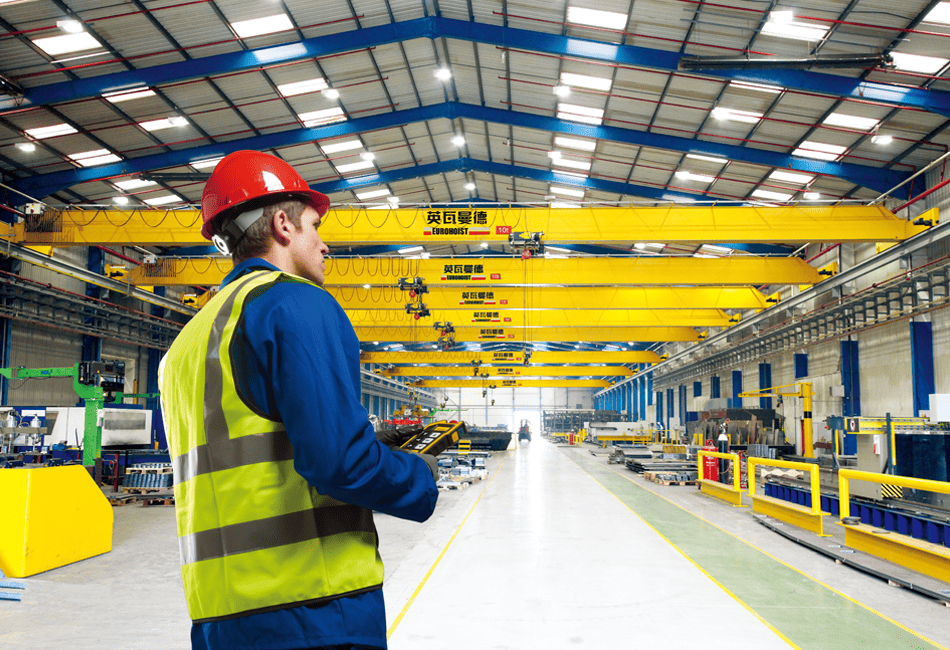
Rail transport is the preferred choice for sustainable transportation in the future. In many cases, EUROHOIST is regarded as a high-quality partner for cranes and components. For locomotive and freight car manufacturing, assembly and maintenance, as well as the corresponding infrastructure development, manufacturers trust EUROHOIST's European-style cranes.
Application Areas
• Rolling stock production
• Rolling stock maintenance &repair
• Infrastructure construction
• Rolling stock production
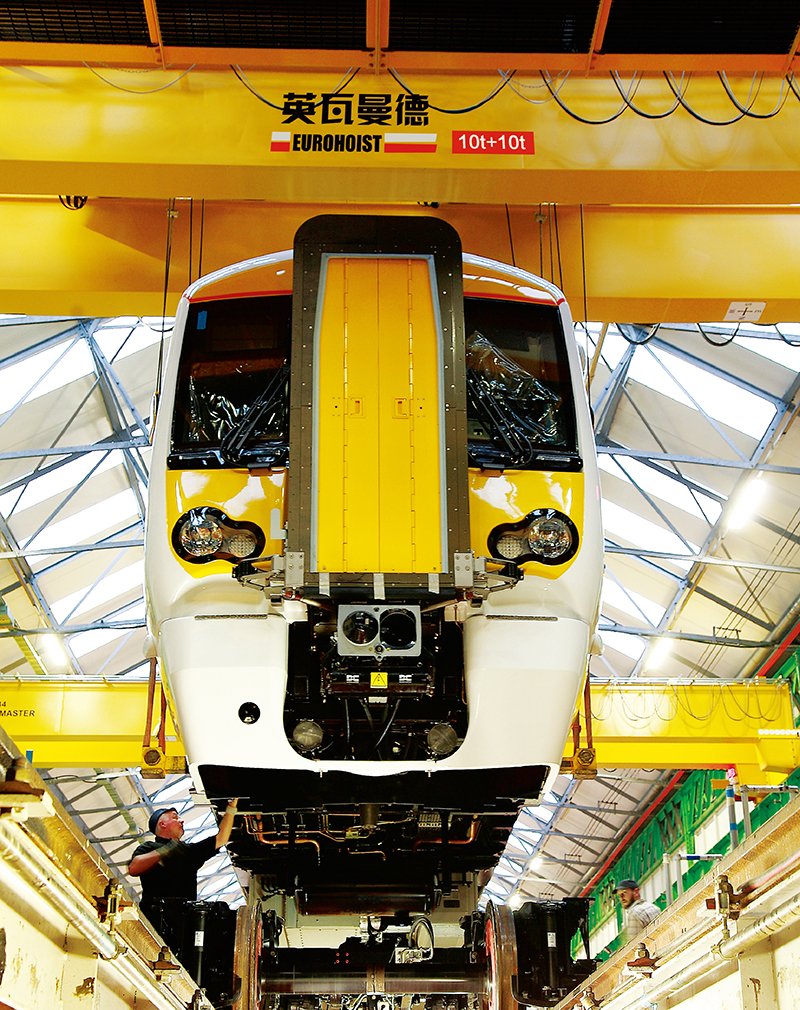
High precision, safety and reliability are the basic requirements for manufacturing and assembling rolling stock. Our imported European-style cranes fully meet these requirements, and even bulky components can be transported gently and reliably and positioned accurately. When necessary, complete car bodies can be handled safely and reliably indoors in combined operations.
EUROHOIST has more than 50 years of experience in supplying imported European-style cranes for railway and rolling stock manufacturing and maintenance. A high level of crane reliability and availability is crucial in an industry where production deadlines and maintenance are critical. Many cranes use tandem lifting for safe and accurate handling and reloading, typical of railway transport assembly.
APPLICATION ENGINEERING
Lifting solutions for rolling stock manufacturing and maintenance
Component and complete vehicle coverage
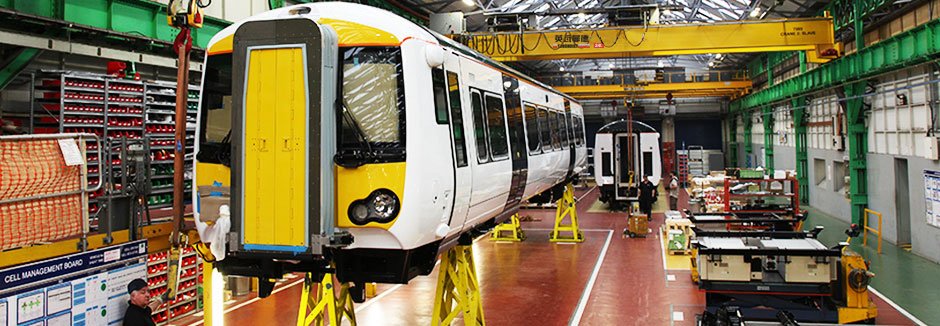
Used for assembly, transfer and maintenance of bogies, wheelsets, car bodies, roof modules and tooling fixtures; can be configured as single cranes, dual-crane tandem lifting or synchronized lifting.
Low-speed and synchronous control
For component alignment and positioning processes, low-speed inching, variable-frequency operation, synchronization monitoring, limit switches and anti-collision are configured to reduce the risk of eccentric loading and swaying.
Maintenance accessibility
In combination with maintenance shed tracks, columns and vehicle clearance, optimize span, headroom and walkways, and reserve space for replacement of wearing parts and electrical diagnostics.
The final configuration must be verified at project level in combination with rated load, load spectrum, span, lifting height, operating cycle, environmental conditions and local regulations.