How to choose intelligent unmanned cranes? From automotive stamping to aviation assembly, one article explains the key decisions for factory automated handling upgrades
- Categories:News
- Publish Time:2026-07-29 14:18:02
EUROHOIST has 80 years of crane manufacturing experience, has built a 30,000-square-meter production and assembly base in Huzhou, China, and has more than 500 employees worldwide, including more than 60 technical personnel. Our intelligent crane solutions cover light-duty and heavy-load handling and can be configured for the application, providing one-stop solutions from individual machines to plant-wide material handling for industries such as automobiles, aviation, papermaking, steel, and power.
EUROHOIST | 80 years of crane manufacturing experience | Specialists in intelligent industrial lifting solutions
1. Factory material handling is undergoing a "silent revolution"
In the stamping workshop of a modern vehicle manufacturer, overhead cranes move heavy dies while their operator cabs remain empty. Material flow throughout the workshop—from moving dies out of storage to the stamping press, returning used dies to storage and positioning the next die—is automatically scheduled by the system. Operators in the central control room monitor the operating status on screen.
This is not a concept demonstration, but a daily production scenario that has been running stably for several years at multiple domestic vehicle manufacturing bases.
What drives this transformation is the real pressure from the global manufacturing industry's simultaneously higher requirements for "efficiency, safety, and precision." Traditional driver-operated overhead cranes are increasingly unable to keep up with the pace of automated production lines—the efficiency ceiling of manual scheduling objectively exists, the operational deviation between skilled workers and novices can reach more than 30%, and the loss from a single die collision accident can be hundreds of thousands or even millions.
At the same time, the technical maturity and return on investment of intelligent unmanned overhead cranes (also called unmanned overhead cranes, fully automatic cranes) have crossed the decision threshold of most manufacturing enterprises. It is no longer a "high-tech demonstration project," but has entered the stage of a "conventional equipment selection list."
2. Three bottlenecks in traditional overhead crane operation
Bottleneck 1: Labor efficiency ceiling
A standard overhead crane position usually requires three shifts, with a certified driver per shift. Even without considering recruitment difficulty and personnel turnover, the efficiency upper limit of manual operation is certain: one driver can only operate one piece of equipment at the same time, and affected by fatigue and attention, operational precision begins to decline after 2 hours of continuous work.
Bottleneck 2: Precision relies on feel
Automobile stamping workshops moving 60-ton dies, papermaking workshops aligning multi-ton rollers, aviation workshops hoisting precision components—these scenarios require "stability" and "accuracy" at the millimeter level. But a manual driver sits in a cab dozens of meters away from the suspended load, operating entirely by experience and "feel," and the actual position deviation, swing amplitude, and alignment precision of the suspended load cannot be precisely and quantitatively controlled.
Bottleneck 3: Information silos
Even when a factory's ERP, MES and WMS systems digitally manage orders, production schedules and inventory, its overhead crane may still operate offline. The systems cannot see the crane's current position, the material it has just moved or its next destination. The crane becomes the missing final link in factory digitalization.
3. EUROHOIST fully automatic unmanned overhead crane: five core technologies let the crane "think for itself"
EUROHOIST has 80 years of crane manufacturing experience, has built a 30,000-square-meter production and assembly base in Huzhou, China, and has more than 500 employees worldwide, including more than 60 technical personnel. Our intelligent crane solutions cover light-duty and heavy-load handling and can be configured for the application, providing one-stop solutions from individual machines to plant-wide material handling for industries such as automobiles, aviation, papermaking, steel, and power.
The following is our core technology system that distinguishes our fully automatic unmanned overhead crane from "simply adding sensors":
Technology 1: Fully automatic target positioning system — precision enters the millimeter era
In an automobile stamping workshop, a set of body panel dies weighs 30-60 tons, and every alignment during die change cannot tolerate the slightest deviation. Our target positioning system can preset 8 origin positions and 120 target positions for automatic handling paths. The operator only needs to input the die position number through the wireless remote control, and the crane automatically runs to the specified position to complete die pickup or placement—no personnel need to approach the suspended load throughout the process, and a single die change time is compressed from 15-20 minutes of manual operation to 5-8 minutes.
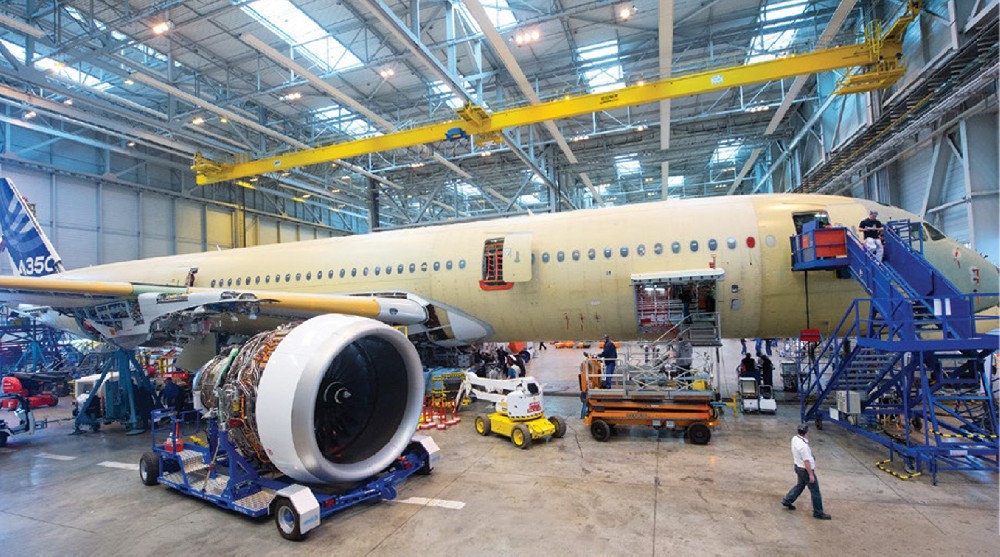
This capability is equally outstanding in the aviation manufacturing field: the hoisting and alignment of aircraft fuselage components and wings requires millimeter-level spatial matching precision, and any sway or deviation may damage expensive composite structures.
Technology 2: High-precision anti-sway control — heavy loads can also move "as if on flat ground"
During acceleration and deceleration of a crane, the suspended load naturally swings due to inertia; the larger the tonnage and the higher the lifting height, the more obvious the swing amplitude. Our self-developed anti-sway control system, through real-time closed-loop adjustment of the travel speed and acceleration of the trolley and bridge, can control the swing amplitude of a 60-ton load throughout the entire operation at an extremely low level—the movement trajectory of the suspended load from point A to point B is almost a straight line, stopping immediately upon arrival without waiting for the sway to subside.
This system is not a simple "algorithm plug-in," but the result of coordinated optimization across the entire chain from the mechanical transmission system (SEW geared motor + hardened ground gears) to the variable-frequency drive parameters to the control algorithm. Relying solely on software algorithms to "remedy" a poor transmission system can never achieve "whole-machine-level" anti-sway effect.
Technology 3: PLC-driven fully automatic operation logic — not pieced together, but native to the whole machine
Many so-called "intelligent overhead cranes" on the market are "pieced together" by adding sensors, cameras, and controllers to traditional manual cranes. The hidden danger of this approach is that the mechanical structure design did not consider the centering, rigidity, and dynamic response requirements of automatic operation; the electrical system was not selected and wired according to fully automatic logic—the functions added later can only "run," but not necessarily "run stably, run accurately, and run for a long time."
EUROHOIST's fully automatic cranes have been planned according to fully automatic working conditions from the first day of design. From the box-girder structural rigidity of the main girder, to the straightness tolerance of the trolley rail, to the reserved I/O points of the electrical control cabinet and EMC anti-interference design, everything is developed around the core goal of "unmanned operation." Integrated functions include: automatic detection and recognition, intelligent path planning, remote control, automatic obstacle avoidance, fault self-diagnosis, voice control etc., and the data interaction and logical coordination among modules are completed at the system level before delivery.
Technology 4: Multi-industry customized solutions — not one piece of equipment for all applications
Different industries have vastly different requirements for overhead cranes. The same solution may be "overkill" in one scenario or "a small horse pulling a big cart" in another. Based on 80 years of cross-industry delivery experience, EUROHOIST has established customized product platforms for different industries:
Industry | Core Requirements | EUROHOIST Solution Features |
Automotive Manufacturing | High-speed die change for stamping dies, precise lifting for engine/component assembly lines | 60T-class target positioning + anti-sway, automatic pick-and-place at 120 preset positions |
Aerospace | Large-span hangar + precision component assembly | Multi-point suspension + micro-motion speed incremental positioning, meeting precise alignment over long travel distances |
Pulp and Paper | Corrosion protection in wet environments + fully automated paper roll storage | 50 years of industry experience, fully sealed corrosion-resistant structure + automated paper roll storage solution |
Steel and Aluminum | High-temperature heavy-load continuous operation | Special high-temperature configuration, supporting fully automated steel coil/aluminum coil in/out storage |
Power and Energy | Lifting of large components for power generation equipment | 300T+ large-tonnage customization, supporting generator set installation and maintenance scenarios |
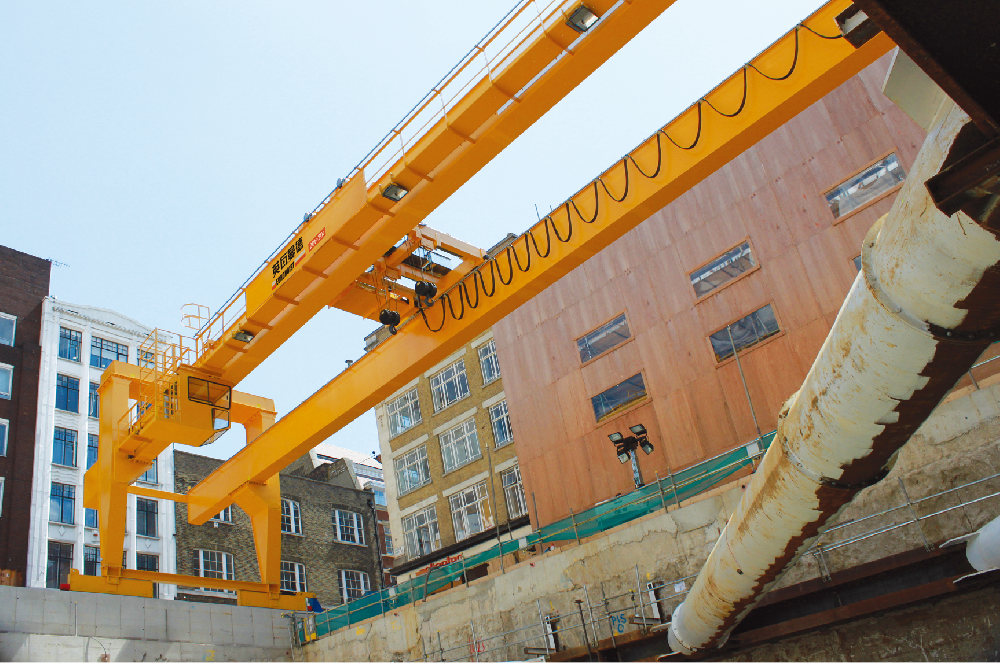
General Machinery Manufacturing | Flexible adaptation + cost-effectiveness | Standard European-style crane + intelligent modules selected as needed, progressive upgrades |
Technology Five: Safety Redundancy System — The prerequisite for automatic operation is "stopping in a controlled manner"
For an unmanned fully automatic crane, the greatest test is not "whether it can move," but "whether it can stop absolutely reliably when it should stop." Our safety redundancy design covers three dimensions: the sensor layer, the controller layer, and the actuator layer: when laser positioning fails, it automatically degrades to encoder incremental positioning mode; when the main controller is abnormal, the backup controller takes over; the emergency braking circuit adopts a dual-circuit hardwired design — no single failure will cause the equipment to lose control.
IV. Why is now the best time to upgrade to a fully automatic crane?
Industry Trend: From "Demonstration Project" to "Standard Configuration"
Over the past five years, intelligent unmanned cranes have started from steel coil warehouse management in the steel industry and rapidly expanded into manufacturing fields such as automotive, aerospace, papermaking, and power. The stamping workshops of major domestic vehicle groups have almost all been equipped with or planned fully automatic die-handling cranes, and newly built modern paper production lines and aerospace assembly workshops also generally include them in their standard equipment lists.
Policy Driver: Special Support for Equipment Renewal
The 2026 special policy for equipment renewal (including ultra-long-term special government bonds) focuses on supporting manufacturing enterprises in upgrading to high-end, intelligent, and green equipment. For traditional overhead cranes in operation for more than 10 years, upgrading to fully automatic models through this policy window can stack multiple policy benefits such as equipment deductions and special subsidies.
Workforce Structure Change: Old Operators Retire, Young People Don't Take Over
Data from the State Administration for Market Regulation shows that the average annual number of newly certified special equipment operators (including lifting machinery operators) continues to decline, while the average age of existing certified personnel rises year by year. Fully automatic cranes do not "replace people," but rather free up limited manpower from the high-intensity repetitive labor in high-altitude driver's cabs and redirect it to central control supervision and equipment maintenance positions that require more judgment — this is the most realistic path to solving the dilemma of "being unable to recruit crane operators."
An Inevitable Step Toward the Digital Factory
ERP manages orders, MES manages production scheduling, WMS manages inventory—but if the material handling within the workshop still requires manual operation, this digital chain breaks at the most valuable "last mile." The seamless integration of fully automatic cranes with the host system enables the factory's logistics data to truly form a complete closed loop from supplier to production line.
5. How do you assess whether your factory is ready for an upgrade?
We recommend doing a quick self-assessment from the following five dimensions:
Assessment Dimension | Signals for Upgrade Suitability | Signals to Wait |
Crane Service Life | Existing cranes have been in operation for 5-8 years, structure is in good condition, but efficiency bottlenecks are obvious | Cranes were purchased less than 3 years ago, and there is no budget for scrapping and replacement yet |
Labor Cost Pressure | Crane positions run three shifts with ≥6 people, total annual labor cost exceeds 500,000 | Crane usage frequency is low, one shift is sufficient |
Precision and Efficiency Requirements | Unstable operation causes mold collisions and material alignment deviations that affect production line takt time | Current crane operation precision can meet production requirements, with no obvious efficiency loss |
Digital System Foundation | MES/WMS systems have been deployed, and automatic collection of material handling data is needed | The factory's digital infrastructure is still in the early stages of construction |
Budget and Policy Support | There is an equipment renewal budget for the year, and it is possible to apply for technical transformation subsidies or ultra-long-term treasury bond support | No equipment renewal budget arrangement at present |
If 3 or more of the 5 dimensions fall into the "Suitable for Upgrade" column, the upgrade to fully automatic cranes is worth launching a feasibility study.
6. Frequently Asked Questions (FAQ)
Q1: Does the EUROHOIST fully automatic crane really require no human operation?
Under normal operating conditions, the equipment autonomously handles materials according to instructions from the supervisory system. Central control room operators monitor operation and intervene when alarms or abnormal conditions occur. Personnel are still required for maintenance, initial commissioning with the first workpiece and emergency response. The change moves operators from crane cabs to the control room, allowing one person to supervise multiple machines.
Q2: What are the infrastructure requirements for a fully automatic crane in a factory?
There are mainly two points: first, the straightness and flatness of the crane runway need to meet the requirements of laser positioning (we will conduct runway inspection during the project survey phase and provide rectification suggestions); second, the factory needs to deploy an industrial Ethernet or WiFi network covering the crane operation area for data communication between the equipment and the central control room.
Q3: Is the failure rate of your fully automatic cranes high? Is daily maintenance complicated?
EUROHOIST equipment adopts a low-maintenance design concept. Key drive components are selected from top international brands, and transmission gears are hardened and ground. The equipment has a built-in fault self-diagnosis system that can issue warnings before problems worsen. Daily maintenance mainly involves keeping the laser sensor lens clean, regularly calibrating positioning accuracy, and replacing wear parts according to plan—usually 1-2 electricians/instrument technicians trained by us are sufficient. In addition, we also provide regular inspections and remote technical support services.
Q4: What is the approximate investment payback period for a fully automatic crane?
Based on operating data from completed projects, automotive stamping workshops with frequent die changes typically take 1.5-2 years to recover the investment—the main benefit comes from increased capacity due to shorter die-change times. In general machinery manufacturing workshops with moderate usage, the payback period is typically 2.5-3.5 years—the main benefit comes from reduced labor and improved material handling efficiency. We can perform a targeted ROI calculation for your specific working conditions in the early stage.
Q5: Do you have a service team in China? How is spare parts supply guaranteed?
We have a 30,000-square-meter production and assembly base and spare parts warehousing center in Huzhou, Zhejiang. Within the Yangtze River Delta region, we can arrive on site within 24 hours. Key components use internationally common brands (such as SEW, Siemens, etc.), and users can also purchase replacements from the market themselves. There is no issue of "exclusive monopoly on parts".
Q6: Can the fully automatic crane interface with our MES/WMS system?
Yes. EUROHOIST fully automatic cranes have standard industrial communication interfaces supporting widely used protocols such as Profinet, EtherNet/IP and Modbus TCP, enabling data exchange with mainstream MES/WMS systems. During implementation, we work with your IT team and system supplier on interface development, integration and commissioning.
EUROHOIST
80 years of crane manufacturing experience | Specialists in intelligent industrial lifting solutions
China production and assembly base: Huzhou High-tech Zone, Zhejiang | Factory area: 30,000 square meters
Product range: Light-duty and heavy-load handling, configured for the application | Fully automatic cranes | General bridge/gantry cranes | Explosion-proof cranes | Cleanroom cranes | Garbage grab cranes | Various electric hoists
Service fields: Automotive manufacturing | Aerospace | Pulp and paper | Steel and aluminum | Power and energy | Machinery manufacturing | Railway transportation | Food processing
Global partners: China National Building Material | Sinoma International | GE | Alstom | Hyundai (Korea) | Emirates Global Aluminium
Official website: www.EUROHOIST.com.cn