How to Choose an Overhead and Gantry Crane Manufacturer: Manufacturing Capability, Delivery and Service
- Categories:News
- Publish Time:2026-08-06 10:29:17
Many buyers focus on the initial price when selecting overhead and gantry cranes. Yet a crane is used for 15–20 years, and its largest costs often come from building works, energy consumption, downtime and operating efficiency rather than the initial purchase price. Choosing the right manufacturer helps reduce these costs; choosing poorly can multiply the cost of an apparent purchase saving over the operating life.
EUROHOIST | 80 years of crane manufacturing experience | Specialists in intelligent industrial lifting solutions
1. What Are You Really Choosing When Selecting an Overhead and Gantry Crane Manufacturer?
Many buyers habitually focus on "whether the price is low" when selecting an overhead crane. However, an overhead crane is used for 15-20 years, and the real major cost is never the initial purchase price—it lies in plant civil engineering investment, operational energy consumption, downtime losses, and efficiency differences. Choose the right manufacturer, and these costs can be saved; choose the wrong manufacturer, and the saved purchase price difference will be multiplied and paid back during the operation period.
So, what exactly are you choosing when "choosing a manufacturer"? We believe it is essentially evaluating five things:
Can they build?—Do they have a real manufacturing base and process capabilities, or are they purely outsourcing assembly?
Do they understand technology?—Is the control system self-developed or purchased? Do they have special customization capabilities?
Can they deliver?—Localized manufacturing or not determines the real level of delivery time, spare parts, and after-sales service.
Do they have experience?—Landing cases in the same industry and same working conditions are the best proof of strength.
Can they upgrade?—Is the equipment open-interface and can it be gradually upgraded with the factory's digitalization process?
This article will clarify the evaluation methods for these five dimensions.
2. Five Dimensions for Evaluating the Strength of Overhead Crane Manufacturers
Dimension 1: Manufacturing Base and Process Capabilities
Main girders, end carriages and, for gantry cranes, support legs are large welded structural components. Manufacturing quality directly determines equipment lifespan. When evaluating a manufacturer, focus on:
Own factory size: Do they have their own production and assembly base? How large is it? Or is it purely outsourcing based on drawings?
Welding process: Do they use automated welding? Do they perform non-destructive testing such as ultrasonic testing?
Testing capabilities: Do they conduct complete machine trial runs, load tests, and precision inspections before delivery?
In one sentence:"There are many manufacturers that can produce drawings, but manufacturers that can build well require on-site inspection of the factory.".
Dimension 2: Technology R&D and Control Systems
This is the most obvious dividing line between large and small factories. The "value high ground" of overhead cranes has shifted from steel structures to control systems:
Is variable frequency drive standard? Is anti-sway control mature?
Is the PLC program self-developed or simply pieced together?
Does it support standard industrial protocols such as Profinet/EtherNet/IP/Modbus TCP?
Does it have special customization capabilities (explosion-proof, cleanroom, large tonnage, special spreaders)?
Electrical R&D and system integration capabilities determine whether your equipment is a "machine that can lift" or "equipment that can connect to a smart factory."
Dimension 3: Delivery and Service Models
The core difference between imported brands and international brands manufactured locally lies in this dimension:
Imported brands: quality benchmark, but long delivery times, long sea freight cycles for spare parts, and after-sales relying on local agents;
Localized manufacturing(international brands with production bases in China): retain European technical standards while possessing the delivery speed, spare parts warehousing, and direct after-sales response of domestic manufacturing.
For the vast majority of domestic projects, localized manufacturing means more controllable delivery times, more accessible service, and more realistic costs—this is precisely why the "imported quality + localized delivery" model is increasingly favored.
Dimension Four: Industry Implementation Experience
Overhead cranes and gantry cranes are not "one set of drawings for all" generic products. The same tonnage, used in an automotive stamping workshop, a paper mill, a waste incineration power plant, or a chemical workshop, has completely different requirements for the equipment. When evaluating a manufacturer, focus on:
Do they have implementation cases in your industry?
Do they have experience with the corresponding working conditions (high temperature, dust, corrosion, explosion-proof, cleanroom)?
Is this experience "done once" or "deeply cultivated for many years"?
The depth of cross-industry experience determines the manufacturer's ability to respond to the non-standard requirements of your project.
Dimension Five: Intelligent Upgrade Space
Digital factories are the general trend. When selecting, confirm two points:
Whether the control system architecture is open—can it interface with MES/WMS, and does it require hardware changes?
Whether intelligent interfaces are reserved—can the basic model purchased today be upgraded to semi-automatic/full-automatic tomorrow?
The lifecycle of a piece of equipment is 15-20 years, so selection must consider the time dimension.
III. EUROHOIST: Five Capabilities That Answer "Why It's Worth Choosing"
EUROHOIST has 80 years of crane manufacturing experience, has built a 30,000-square-meter production and assembly base in Huzhou, China, and has more than 500 employees worldwide, including more than 60 technical personnel. Our products support light-duty and heavy-load handling, with rated specifications selected for the application, including overhead cranes, gantry cranes, portal cranes, jib cranes, flexible beam light-duty cranes, fully automatic cranes, and various electric hoists.
The following five capabilities are our answer to the question of "the strength of overhead crane and gantry crane manufacturers":
Capability One: Full-spectrum product coverage, one-stop satisfaction of overhead + gantry needs
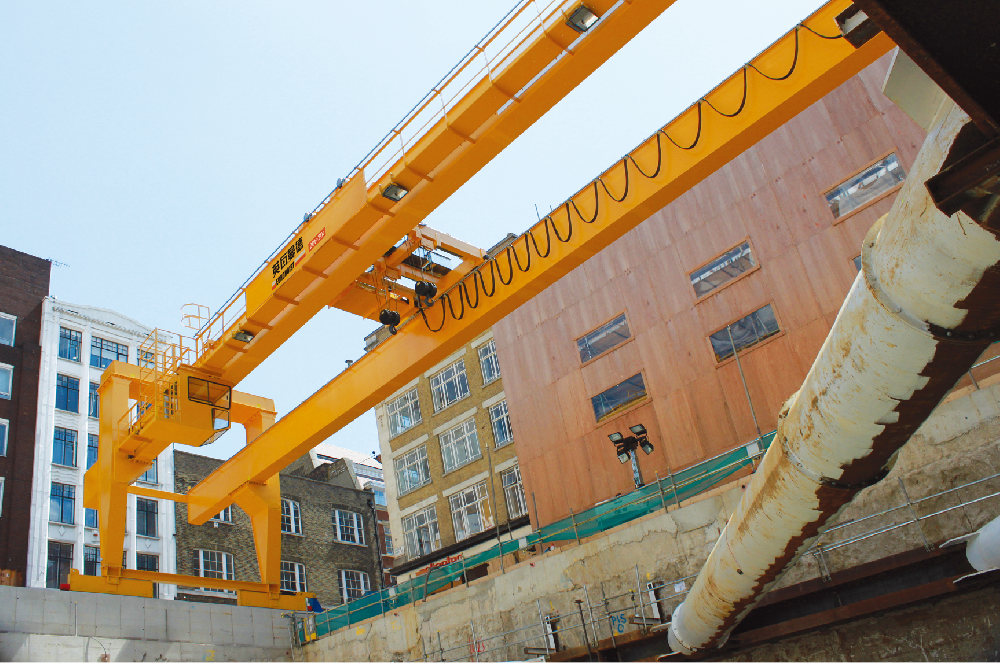
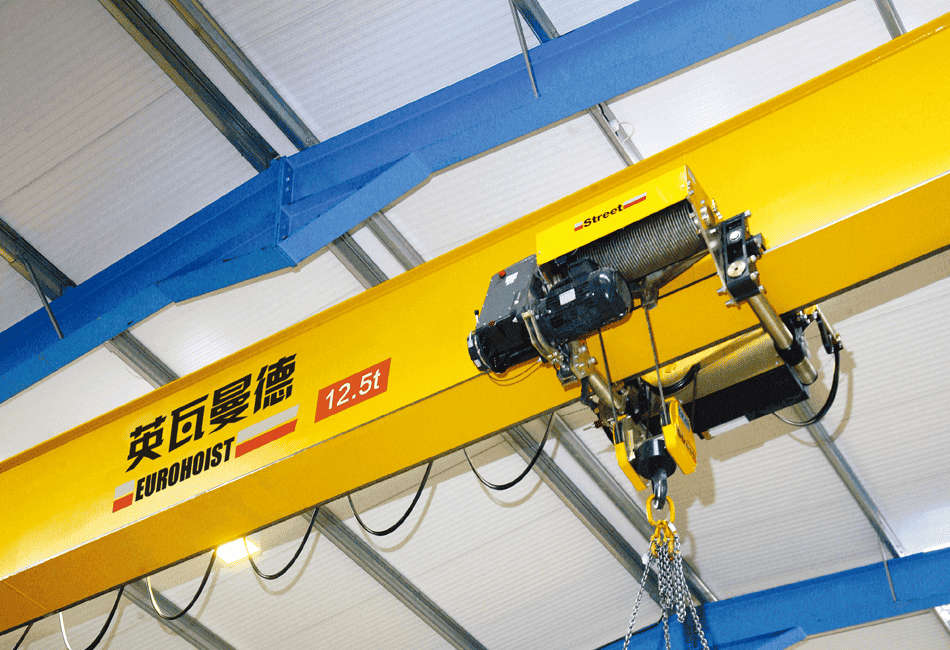
Overhead cranes (bridge type) and gantry cranes have different requirements for structural design and working condition adaptation, but many projects require both types of equipment. Our product line simultaneously covers overhead cranes (single girder/double girder) and gantry cranes (including portal and semi-portal), as well as various matching electric hoists—customers can complete full-spectrum selection with one company, unifying technical standards and after-sales responsibility, and avoiding the trouble of dealing with multiple parties.
Capability Two: Special customization strength, breaking through the boundaries of "standard products"
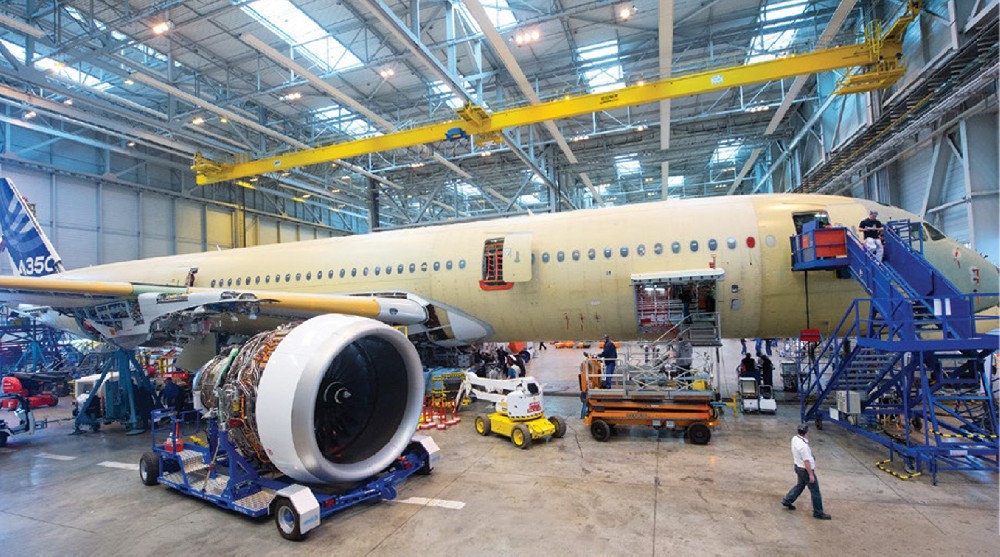
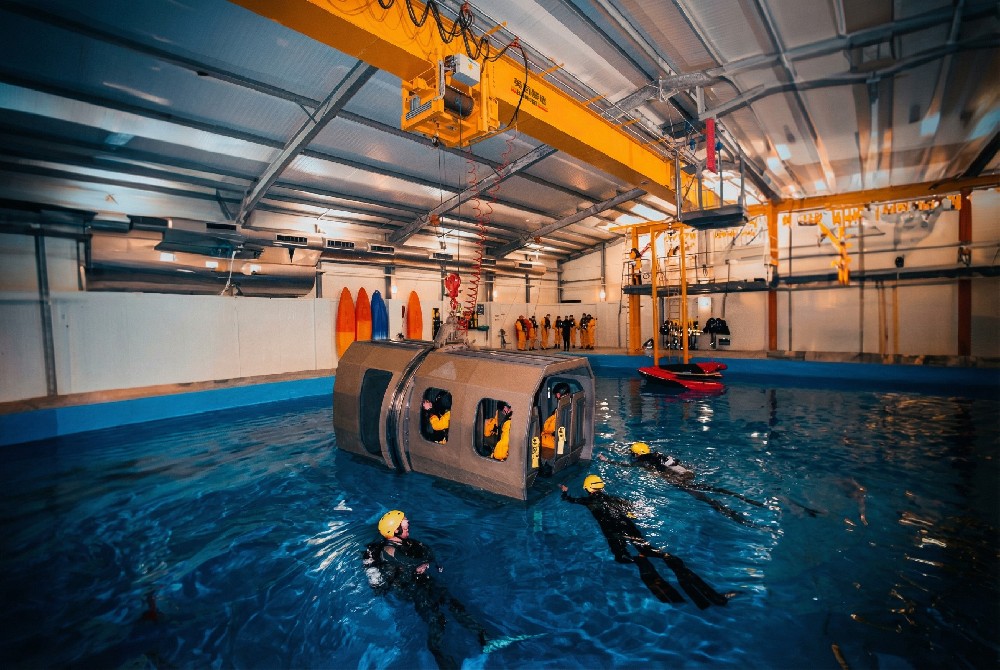
Our special cranes support advanced configurations such as multiple support points, multiple spans, rotation, suspension, heavy duty, and visual recognition, Special lifting capacity up to 250 tons SWL, working class M8 (CMAA Class F). Whether it is a fully automatic garbage crane for waste incineration power generation, long-distance hangar lifting for aircraft manufacturing, or precision placement of rollers in a paper mill, we have mature customized solutions—not "only having done standard products," but having the ability to respond to demanding non-standard requirements.
Capability Three: European-style lightweight design, helping customers save on civil works and energy consumption
Using Q355-B high-strength steel and compact structural design, the overall dead weight is reduced while meeting rated load and working class requirements—lighter equipment means less load pressure on factory corbels, rail beams, and foundations, and lower civil works investment; under the same lifting height requirement, the European-style compact structure can also help reduce factory clear height requirements; long-term travel power consumption and rail wear are also lower. For existing factory renovations, lightweighting often means "can be installed without reinforcement."
Capability 4: Fully automatic intelligent control, making the equipment a node in the smart factory
Our independently developed fully automatic control platform supports PLC automatic operation, anti-sway control, precise positioning, and automatic path planning. It adopts standard industrial protocols such as Profinet/EtherNet/IP/Modbus TCP and can interface with MES/WMS systems. From manual assistance, semi-automatic to fully automatic, the equipment supports progressive upgrades—The basic model you buy today can be upgraded to a smart model in the future without replacing the entire machine..
Capability 5: Localized manufacturing + international standards, strong in both delivery and service
Core transmission components are selected from international first-tier brands (SEW geared motors, Siemens electrical components, etc.). The complete machine is manufactured, assembled, and factory-tested at the 30,000 square meter base in Huzhou—combining the quality consistency under European technical standards with the delivery, cost, and after-sales advantages brought by domestic manufacturing. Spare parts are warehoused domestically, the service team is close to customers, key components use internationally common brands, and spare parts procurement channels are smooth.
IV. Overhead Crane and Gantry Crane Procurement Decision Checklist
Before contacting suppliers, it is recommended to fill out this checklist first:
Step | What to do | Key actions |
| 01 | Clarify equipment type | Indoor operations → overhead crane; outdoor/cross-plant → gantry crane; both → evaluate a one-stop solution |
| 02 | Determine core parameters | Lifting capacity, span, lifting height, duty class, travel speed |
| 03 | Clarify environmental requirements | Indoor/outdoor, explosion-proof/clean/corrosive/high-temperature/dusty and other special working conditions |
| 04 | Determine the level of intelligence | Current stage manual/semi-automatic/fully automatic, whether to connect to MES/WMS in the next 3-5 years |
| 05 | Evaluate delivery conditions | Current status of plant rails (whether on-site survey is needed), delivery time requirements, installation coordination window |
| 06 | Lock in service guarantees | Spare parts policy, warranty terms, response time, training arrangements |
Take this checklist to communicate with manufacturers, and you will find: solution comparisons are clearer, quotations are more comparable, and the probability of subsequent pitfalls is greatly reduced.
V. Frequently Asked Questions (FAQ)
Q1: Can overhead cranes and gantry cranes be purchased from one manufacturer?
Yes, and it is recommended. Although overhead cranes (bridge type) and gantry cranes (gantry type) have different structures, both involve crane manufacturing, installation, and after-sales. Choosing a manufacturer with the capability to manufacture both types of equipment can unify technical standards, simplify communication interfaces, and centralize after-sales responsibility—especially when both types of equipment are needed for a project, one-stop procurement has obvious advantages in management cost and quality consistency.
Q2: Do you have a production base in China? How long is the delivery time?
Yes. We have a 30,000 square meter production and assembly base in Huzhou, Zhejiang, where the complete machine is manufactured, assembled, and factory-tested. Conventional overhead and gantry cranes take about 3-6 months from contract to delivery; special customizations (explosion-proof, clean, large tonnage, fully automatic) take about 6-9 months, subject to the schedule after project technical communication. Localized manufacturing allows us to better control delivery times and also provides a customer-proximate foundation for installation and commissioning, spare parts supply, and after-sales response.
Q3: Can European-style overhead and gantry cranes be installed in existing plants with limited space or old rails?
In most cases, yes. Our European-style lightweight design has lower overall weight and smaller wheel loads, exerting less bearing pressure on existing plant roof trusses and rails. Many projects can be installed without reinforcing the rail beams; low-headroom solutions can also secure a higher hook lifting position in plants with limited clear height. However, whether installation is possible and whether local reinforcement is needed must be based on the conclusions of an on-site survey—we provide free on-site surveys and solution evaluations.
Q4: Can you manufacture overhead and gantry cranes for explosion-proof and clean workshops?
Yes, and this is one of our specialty capabilities. Leveraging long-term experience in waste incineration power generation and special working conditions, we can provide various special solutions such as explosion-proof configurations (explosion-proof motors, explosion-proof electrical boxes, complete machine explosion-proof certification), clean configurations (fully sealed structures, antibacterial and dust-proof coatings, anti-static), and corrosion-resistant configurations (multi-layer anti-corrosion coatings, corrosion-resistant materials). It is recommended to clarify the working condition level in the early stage of the project, and we will customize according to specifications from the design source.
Q5: Is daily maintenance of overhead and gantry cranes complicated? Are spare parts easy to buy?
Not complicated. Daily maintenance of overhead and gantry cranes mainly includes: wire rope/chain inspection and lubrication, brake calibration, reducer oil level check, rail alignment, and electrical control cabinet cleaning and tightening. Key drive components use internationally common brands (SEW geared motors, Siemens electrical components, etc.). Spare parts can be dispatched from our domestic warehouse or purchased independently from the market; there is no issue of "exclusive monopoly on parts". We provide operation training and regular inspection services. After training, 2-3 electricians/mechanics from the customer can handle daily maintenance.
Q6: If I buy an overhead or gantry crane now, what if I want to connect to an MES system later?
The key is to choose the right control system architecture at the time of selection. Our equipment adopts open standard industrial bus protocols (Profinet/EtherNet/IP/Modbus TCP) and reserves data and communication interfaces—subsequent connection to MES/WMS only requires software-level interface development and joint debugging, without hardware changes. It is recommended to include "open interfaces, support for connecting to upper-level systems" in the technical annex during procurement to avoid future modification troubles.
EUROHOIST
80 years of crane manufacturing experience | Specialists in intelligent industrial lifting solutions
China production and assembly base: Huzhou High-tech Zone, Zhejiang | Factory area: 30,000 square meters
Product range: Light-duty and heavy-load handling, configured for the application | Overhead cranes (single girder/double girder) | Gantry cranes | Portal slewing cranes | Jib cranes | Flexible beam light-duty cranes | Fully automatic cranes | Special custom cranes (250T/M8) | Various electric hoists
Service sectors: Machinery manufacturing | Automotive | Aerospace | Pulp and paper | Steel and aluminum | Power and energy | Waste-to-energy incineration | Railway transportation | Food industry | Construction
Global partners: China National Building Material | Sinoma International | GE | Alstom | Hyundai (Korea) | Emirates Global Aluminium
Official website: www.EUROHOIST.com.cn